Oily Skin
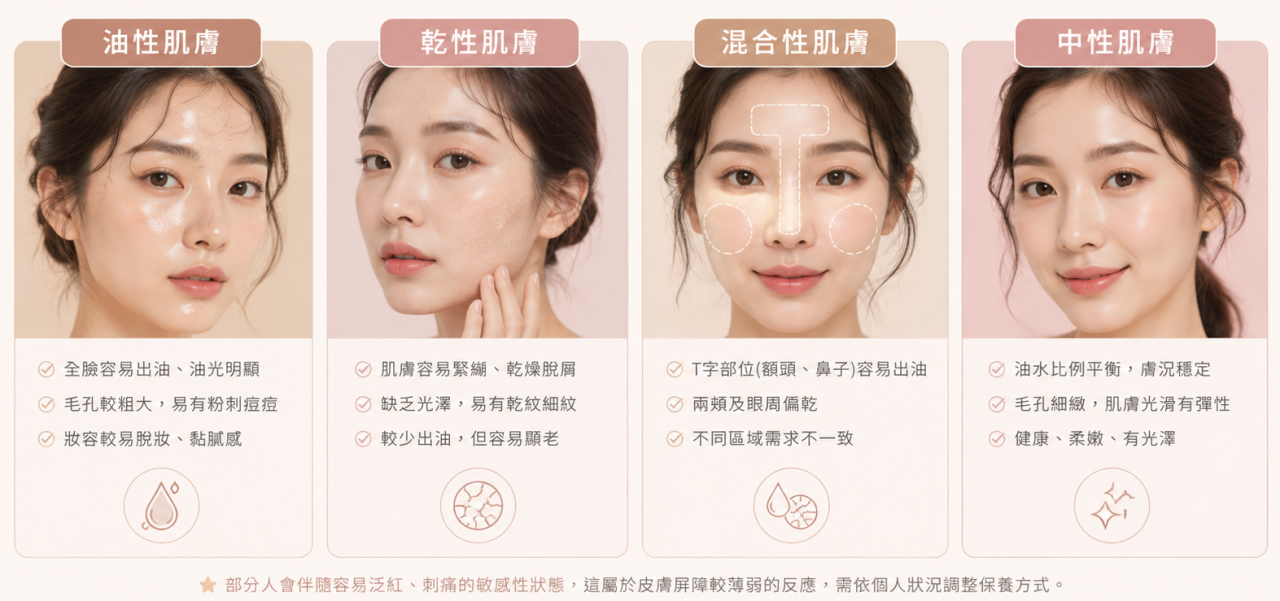
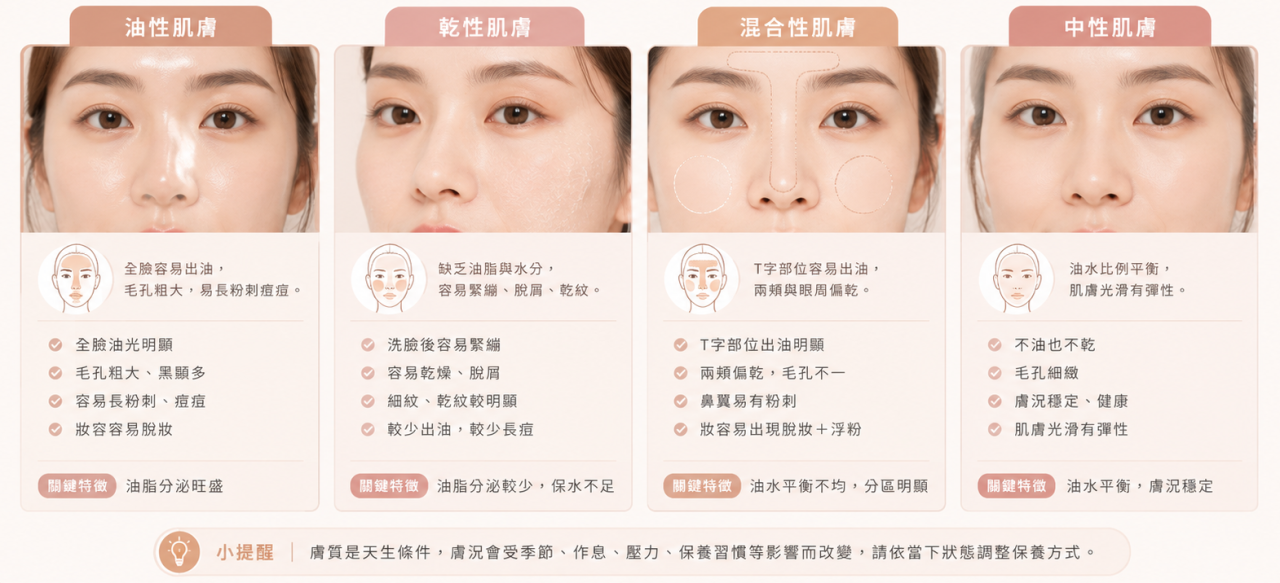
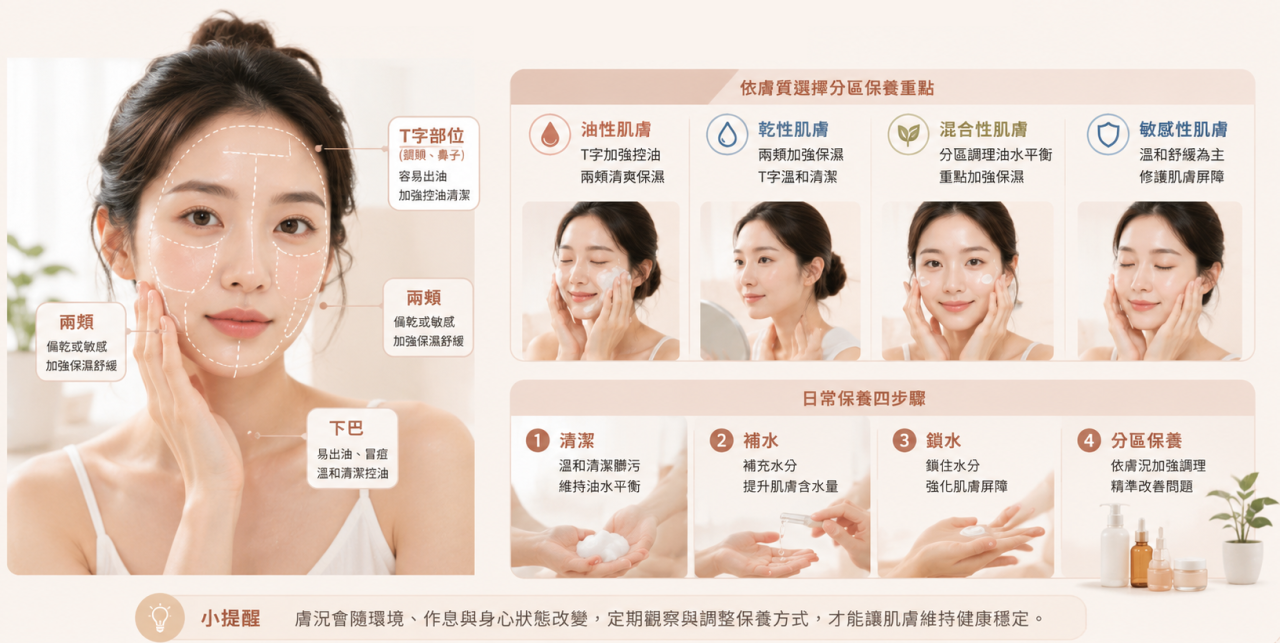
Sebum production is relatively high, so the whole face may look shiny. Pores may appear more visible, with a greater tendency toward clogged pores and breakouts.

You may use oil-control products yet feel increasingly dry, consider yourself oily while your cheeks feel tight and flaky, or find that products once comfortable suddenly cause redness or stinging after a seasonal change.
These signs do not always mean the products are completely unsuitable. They may also result from confusing skin type with current skin condition.
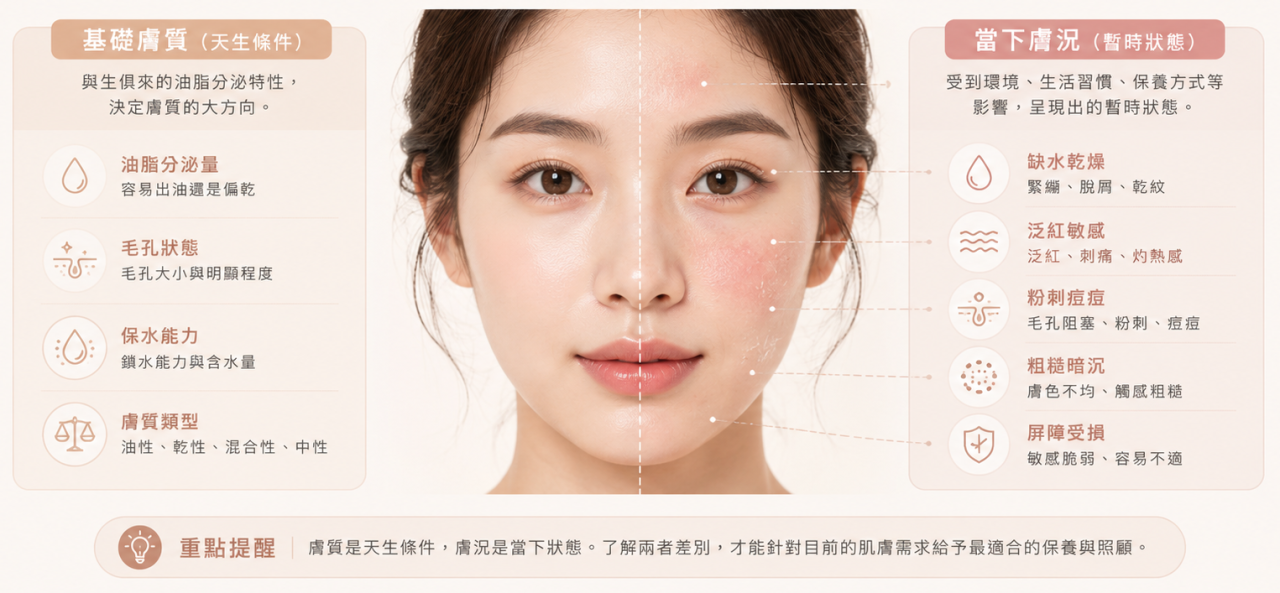
Your skin’s long-term tendency in sebum production and oil-water balance, generally classified as oily, dry, combination, or normal.
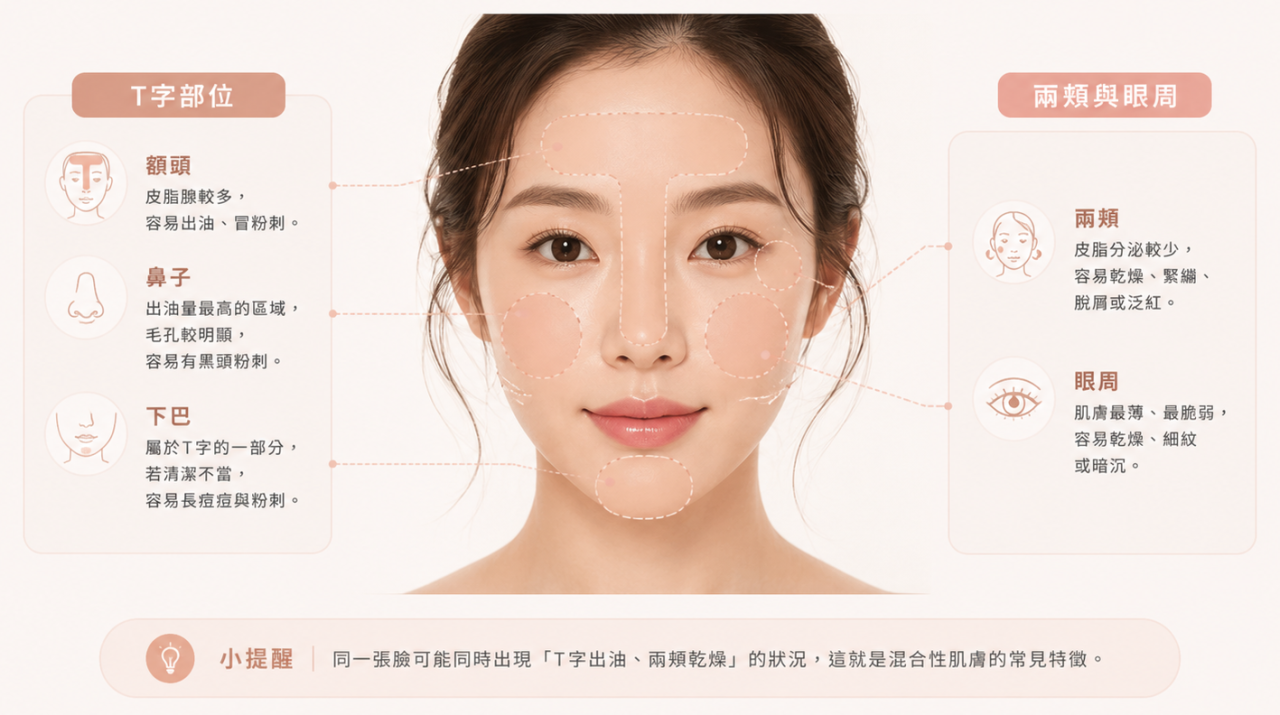
Observe where oil appears, pore visibility, tightness after cleansing, and differences between facial areas.
Your skin’s present state, such as dehydration, roughness, dullness, redness, stinging, flaking, clogged pores, or breakouts.
Skin condition may change with the seasons, stress, sleep patterns, the menstrual cycle, environment, and skincare habits.

Skin type and condition involve more than surface oiliness or dryness. They are also closely related to the epidermis, dermis, subcutaneous tissue, and skin barrier. Understanding basic skin structure makes it easier to see why daily care should include hydration, repair, and protection.
Read: Why Skincare Is More Than Surface Application →
These categories can guide daily observation, but skin is not permanently fixed and may show several characteristics at once.

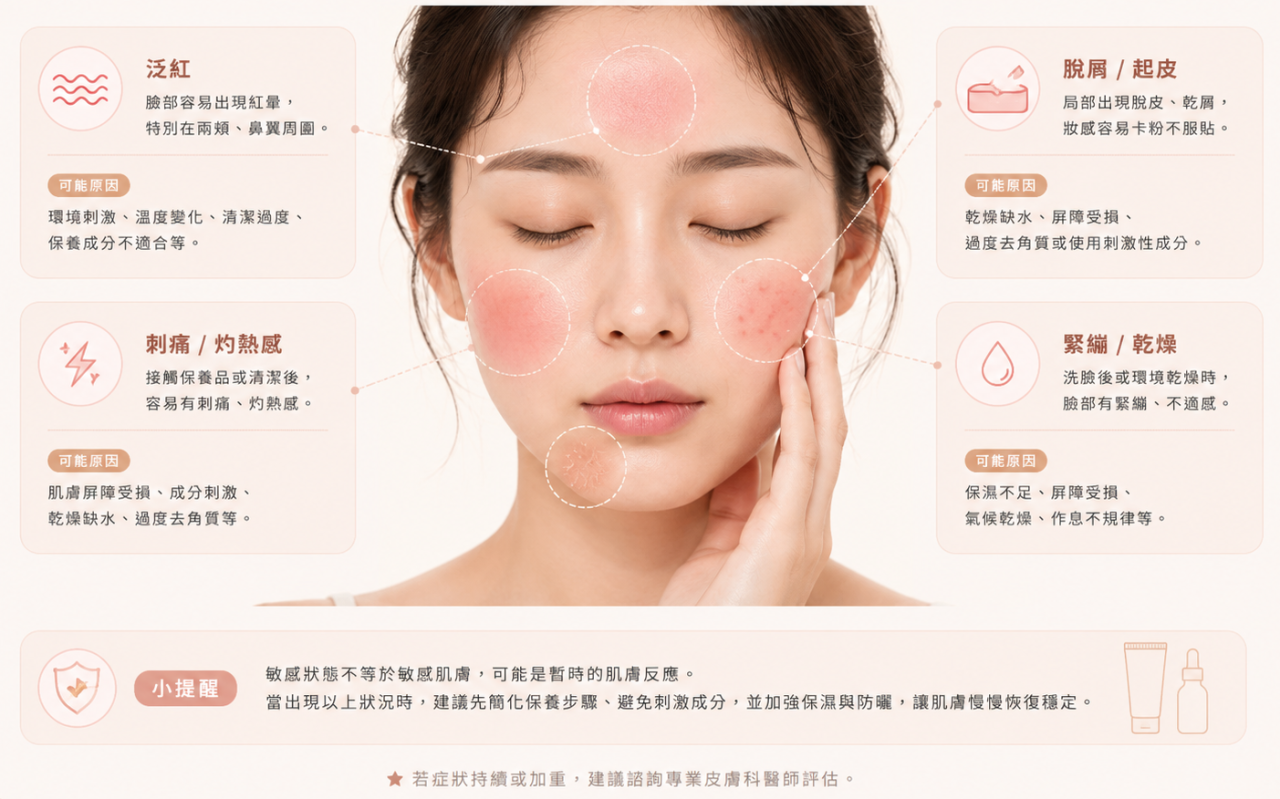
Redness, itching, stinging, burning, tightness, or flaking are better understood as a current sensitive condition. Oily, dry, combination, and normal skin can all become sensitive at certain times.
Some reactions may relate to an unstable skin barrier, environmental changes, over-cleansing, frequent exfoliation, or irritating ingredients, but the actual cause varies by individual.

Choose a time when your skin is relatively stable and has not just undergone exfoliation or a special treatment. Then observe oiliness and tightness after cleansing.
At night, cleanse with a gentle product that normally suits your skin. Do not add exfoliation.
If your skin is stable, temporarily skip toner, serum, lotion, and cream.
After waking and before cleansing, observe oiliness, dryness, and tightness in the T-zone and cheeks.
| Observed Skin Signs | Possible Basic Skin Type |
|---|---|
| Noticeable oiliness in both the T-zone and cheeks | Oily Skin |
| Oily T-zone with dry or tight cheeks | Combination Skin |
| Overall dryness, tightness, or easy flaking | Dry Skin |
| No obvious oiliness or tightness; soft to the touch | Normal Skin |
※ Home observation is only a preliminary reference. If your skin is inflamed, severely red, peeling, or under medical treatment, do not stop prescribed medication or necessary care for testing purposes.

The same person may feel oilier in summer and dry or tight in winter. Late nights, increased stress, or frequent product changes can also make previously stable skin rough or sensitive.

The following are general principles. Products and frequency should still be adjusted according to current skin condition, product directions, and personal tolerance.
| Skin Type | Cleansing | Moisturizing | Care Reminder |
|---|---|---|---|
| Oily | Gently remove excess oil | Choose lightweight, comfortable hydration | Avoid over-cleansing or skipping moisturizer entirely |
| Dry | Avoid noticeable tightness after cleansing | Add suitable nourishment after hydration | Limit frequent exfoliation and highly irritating layers |
| Combination | Adjust cleansing by facial area | Keep the T-zone lightweight and support the cheeks as needed | The same amount is not required across the entire face |
| Normal | Maintain appropriate cleansing | Basic hydration is usually sufficient | Avoid excessive layering in pursuit of faster results |
| Sensitive Condition | Reduce friction and unnecessary irritation | Keep the routine simple, gentle, and comfortable | Seek dermatological evaluation if discomfort continues |

When skin looks dull or rough, or has clogged pores and visible pores, many people consider retinol, AHAs, or salicylic acid. However, these ingredients differ in purpose, feel, and precautions, so check your skin condition and tolerance before use.
Read: What Is the Difference Between Retinol, AHAs, and Salicylic Acid? →Basic skin type usually has a general tendency, but age, hormones, environment, and lifestyle can change how skin behaves, so regular reassessment is helpful.
Oily or combination skin may also be dehydrated, have an unstable barrier, or be over-cleansed. Flaking alone cannot determine skin type.
This depends on the cause of sensitivity, current skin condition, product concentration, and frequency. When skin is red, stinging, or peeling, pause irritating products and seek professional advice.
You do not need to classify it every day, but you can observe oiliness, dryness, tightness, and discomfort, then adjust product amounts accordingly.