If you want your skincare routine to work more efficiently, the first step is not to layer more products, but to understand what your skin truly needs.
From the epidermis and dermis to the subcutaneous tissue, every layer is closely connected to the condition of your skin.

When people talk about skincare, the first things that often come to mind are hydration, a brighter-looking complexion, and stable skin condition.
However, skin condition is not determined only by the surface. It is also related to skin structure, moisture retention, barrier condition, and daily protection.
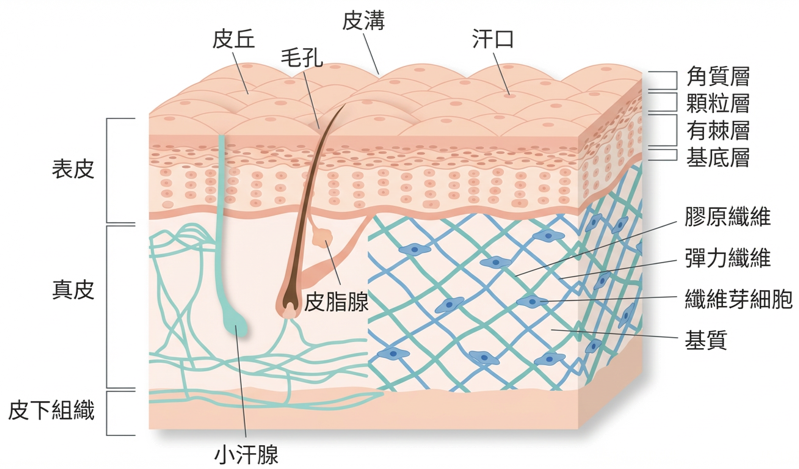
The skin is the outermost protective system of the human body and can mainly be divided into the epidermis, dermis, and subcutaneous tissue.
Each of these three layers has its own function, and together they influence the dryness, roughness, tightness, elasticity, and stability we see and feel.
Simply put: skincare is not just about applying products to the surface. It is about helping the skin maintain a balance of hydration, stability, and daily protection.
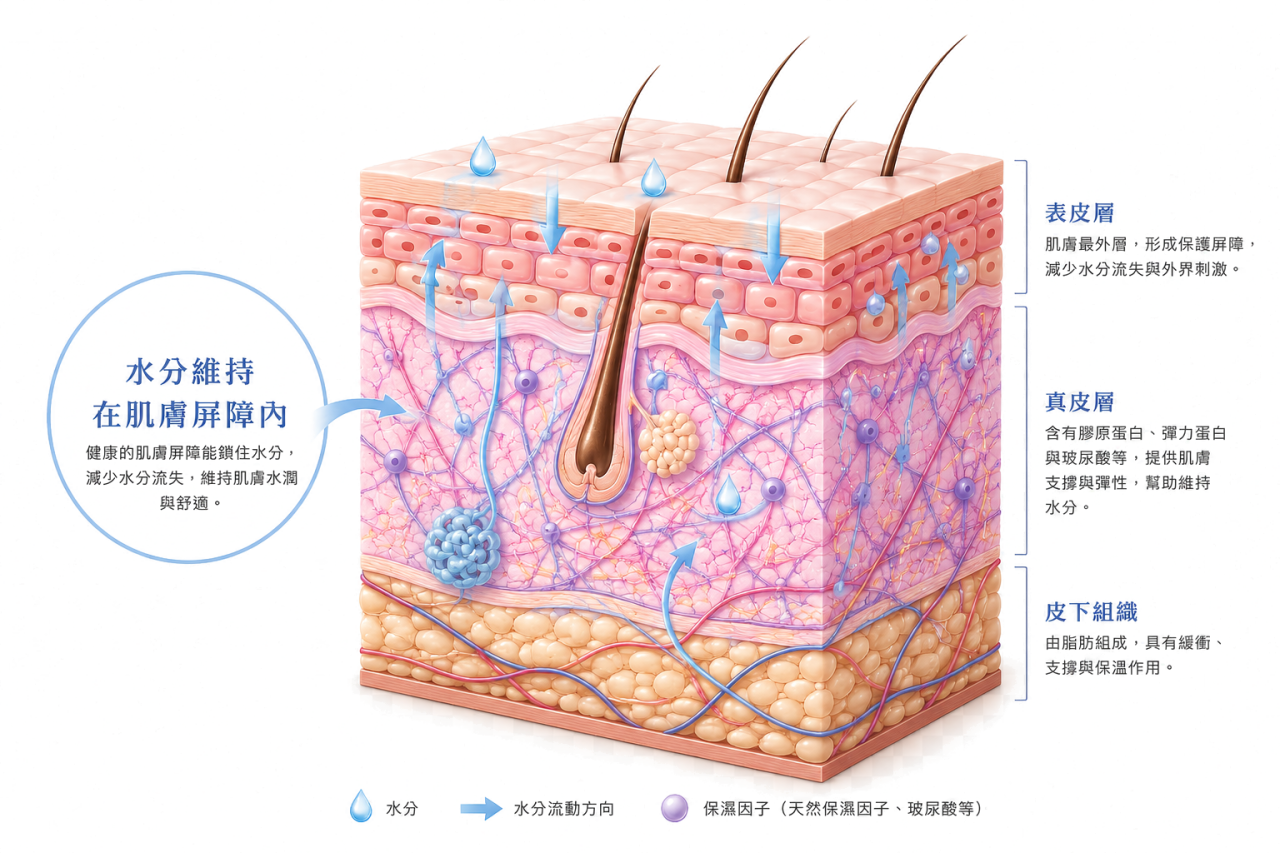
The skin is mainly composed of three major layers: the epidermis, dermis, and subcutaneous tissue. Each layer has its own role, and together they help maintain the skin’s health and protective function.
Located on the outermost layer of the skin, this is the part we see and touch most directly every day. The epidermis is related to skin texture, dryness, roughness, and the feeling of protection.
The dermis contains structures such as collagen fibers, elastic fibers, and matrix. It is related to skin support, elasticity, moisture feel, and youthful-looking condition.
Located in the deeper layer, it mainly provides cushioning, support, and energy storage. It is also part of maintaining the overall stability of the skin structure.

If skincare is only seen as something applied to the surface, it is easy to overlook what the skin truly needs in daily care.
Dryness, tightness, roughness, and instability are often related to moisture retention, barrier condition, and external environmental stress. Therefore, skincare is not only about hydration, but also about repair-supporting care and protection.
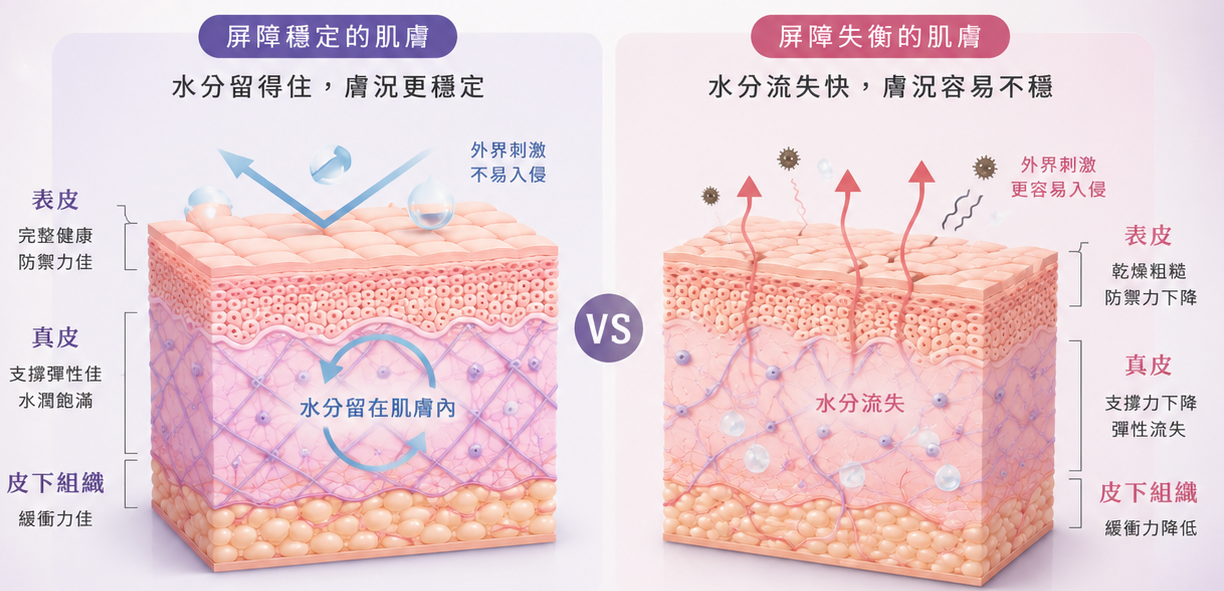
When the skin barrier is unstable, moisture can be lost more easily, and the skin may feel dry, tight, rough, or unstable.
The skin is better able to maintain moisture, and the overall condition looks more stable, soft, and comfortable. This is why daily skincare should focus on hydration and repair-supporting care.
Moisture may be lost more easily, and external environmental stress may make the skin feel dry, tight, rough, or unstable.

The dermis contains collagen fibers and elastic fibers, which are related to skin support, elasticity, and firmness. As age, lifestyle, UV exposure, and external environmental factors affect the skin, its condition may gradually change.
Therefore, daily skincare should not only focus on visible texture and hydration, but also on long-term protection and stability. Good skincare habits are built little by little.
Related to skin support and a plump-looking feel.
Related to skin elasticity and firmness.
Related to the skin’s hydrated feel and supportive environment.
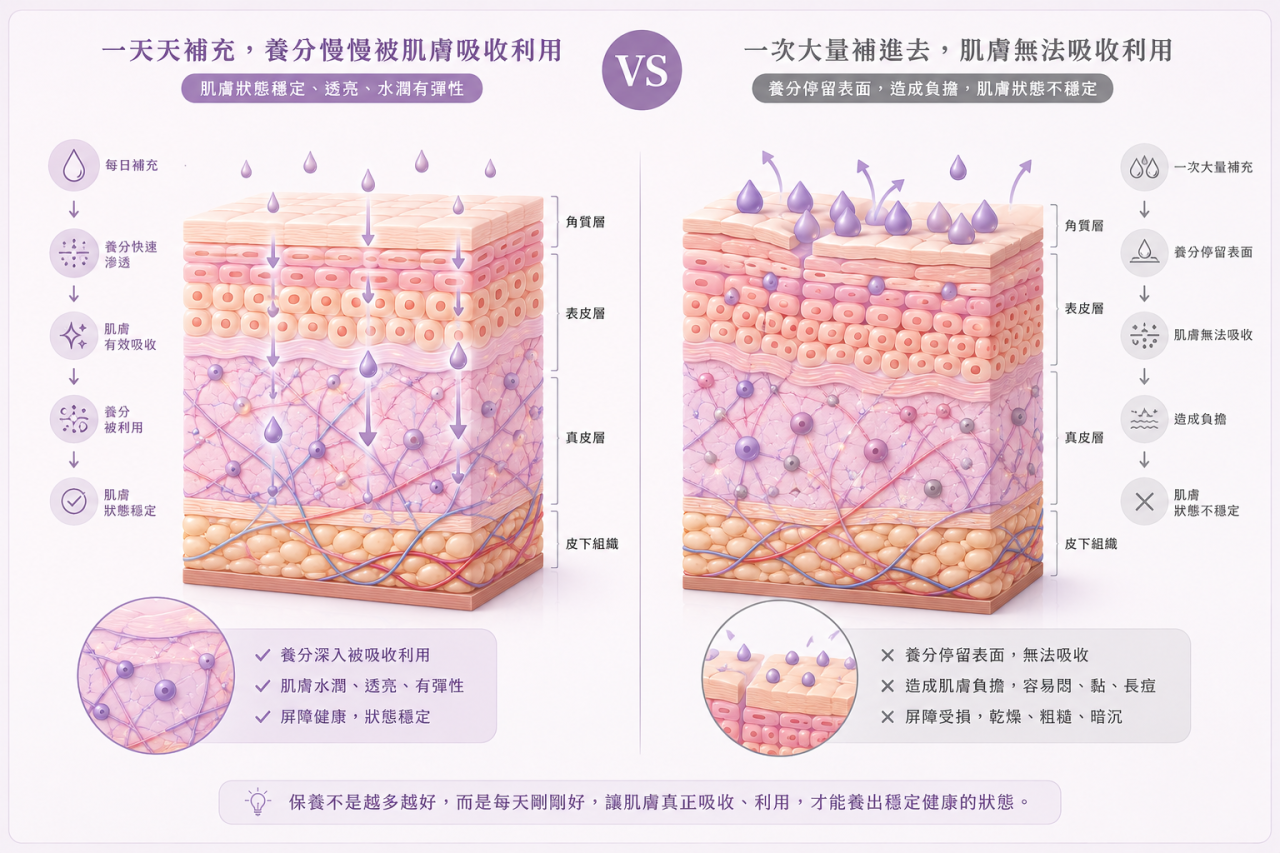
Skincare is not about chasing a one-time miracle. It is about turning hydration, repair-supporting care, and protection into daily habits, helping the skin slowly maintain a stable and comfortable rhythm.
Helps the skin maintain a hydrated and comfortable feel while reducing dryness and tightness.
Helps maintain skin barrier stability, allowing the skin condition to feel more settled.
Use sunscreen and daily protection during the day to reduce the impact of external environmental factors on the skin.

Skincare should not only begin when skin problems appear, nor should it only be taken seriously before important occasions. What truly helps build skin condition is the willingness to spend a little time caring for yourself every day.
Protect the skin in the morning, then complete cleansing and repair-supporting care at night. During dryness, seasonal changes, or stressful periods, treat the skin more gently. These small habits are the foundation of skin stability.
① Keep the skin hydrated and comfortable, and do not let dryness accumulate over time.
② Focus on skin barrier stability, and reduce unnecessary irritation or over-cleansing.
③ Use daytime protection to help the skin stay better protected against the external environment.
Because the skin is not only one surface layer. Understanding the basic functions of the epidermis, dermis, and subcutaneous tissue helps us better understand why the skin needs hydration, repair-supporting care, and protection.
The skin barrier can be understood as the skin’s first protective line against the external environment. When the barrier is stable, the skin is better able to maintain moisture and comfort.
Not necessarily. Dryness may be related to the environment, cleansing habits, changes in skin condition, and the state of the skin barrier. In addition to adding moisture, hydration, repair-supporting care, and daily protection should also be emphasized.
You can start with three things: hydration, repair-supporting care, and protection. Hydration helps maintain moisture, repair-supporting care helps maintain skin barrier stability, and protection helps reduce the impact of the external environment on the skin.
Skincare is not about chasing temporary perfection. It is something built little by little every day. Start by understanding your skin, and make hydration, repair-supporting care, and protection a natural part of your lifestyle.